Vampire Secrecy Law
A Werewolf Thing: A Rejected Mate Werewolf RomanceVampire Secrecy Law is the central rule governing vampire society’s relationship with the human world: vampires must keep their existence secret, and the Vampire Council is responsible for preserving that concealment. The rule is presented not as a private preference but as an institutional duty tied to collective safety, human protection, and the survival of vampire society.
Definition and Institutional Authority
Vampire Secrecy Law requires vampires to prevent humans from learning that vampires exist. Amanda explains that the Vampire Council oversees both the safety of vampires and the safety of humans in areas occupied by vampires, while also ensuring that the species’ secret remains undisclosed. Secrecy therefore serves two linked purposes: protecting vampires from exposure and limiting the danger that vampire existence could pose to humans.
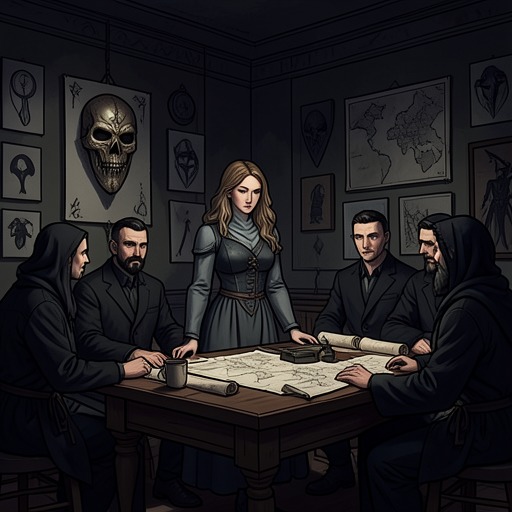
The rule is enforced by a powerful governing body rather than by ordinary social disapproval alone. The council’s members are described as much stronger than average vampires and as possessing abilities beyond those of ordinary vampires. Their most consequential power for secrecy is the ability to erase people’s memories, allowing the council to remove knowledge of vampires when concealment is threatened. This makes the law an active system of control: secrecy can be restored after a breach by altering the minds of those who have learned too much.
Operation in a Divided Supernatural World
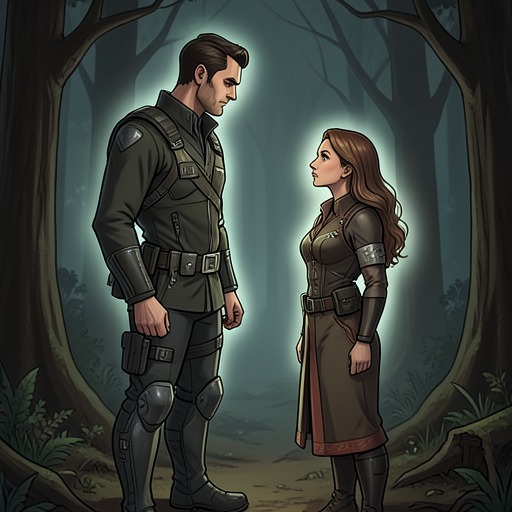
The law operates within a society sharply organized by species boundaries. Saphira Richards is a werewolf and also half witch, while Amanda is a vampire; Simon List’s protective reaction when Amanda is revealed as a vampire shows how dangerous cross-species contact can appear even before the relationship between them is understood. Simon List is identified as Amanda’s mate, turning a potentially hostile encounter between species into an intimate bond that complicates the categories the secrecy system is meant to regulate.
The existence of Banshees as natural enemies of the Faeries further demonstrates that supernatural communities are not unified. Banshees attack a village and use screams capable of killing Faeries when sustained, while the vampire secrecy rule addresses a different boundary: the boundary between supernatural society and humans. Together, these conflicts show a world in which identity is guarded through separation, and in which disclosure, recognition, or physical contact can immediately alter the stakes of an encounter.
Secrecy Under Prophetic and Political Pressure
The law becomes more fragile when Amanda reveals the prophecy of a war between vampires and werewolves. The conflict is destined to occur on the night when the sun is black and stars cross the sky, and its outcome will determine which species becomes dominant. The prophecy also states that two hybrids of the same origin will lead the winning side. This prediction transforms secrecy from a stable social policy into a pressure point in a larger political crisis: the two species are no longer merely concealing themselves from humans but are moving toward open confrontation with one another.
The prophecy also complicates the meaning of identity. Saphira Richards and Trevor Richards are both half werewolf and half witch, and their inherited supernatural status places them outside a simple species division. Their grandfather summons them to perform the Færy ritual because they were expected to lead the Faeries when they reached eighteen, but their mother’s departure changed that succession. The existence of such mixed identities makes the secrecy law harder to apply as a clean boundary, since the people most connected to future leadership may themselves belong to more than one supernatural lineage.
Secrecy, Family, and Personal Knowledge
The rule is also experienced through intimate relationships rather than only through councils and prophecies. Saphira Richards and Trevor Richards share a twin bond: each can sense when the other is distressed, and physical injury to one is felt by the other. Their closeness gives supernatural knowledge a familial form, in contrast to the council’s institutional control over knowledge. Trevor Richards can recognize when Saphira Richards is lying, while the Vampire Council can erase memories from people who have learned the forbidden truth.
Pregnancy adds another layer to the conflict between private life and collective supernatural duties. Saphira Richards tells Trevor Richards that she is pregnant and argues that his safety matters because serious injury to him could affect her baby. Later, when Trevor Richards says that she must not fight because pregnancy prevents her from leading an army, she rejects his attempt to decide the matter for her and insists that she will fight if they are the chosen hybrids. The secrecy law is not directly applied to the pregnancy, but the scene shows how supernatural identity, reproduction, leadership, and war press against the same boundaries that secrecy tries to preserve.
Narrative Significance
Vampire Secrecy Law establishes secrecy as both protection and power. It protects humans and vampires from the consequences of uncontrolled exposure, yet its enforcement through memory erasure gives the Vampire Council authority over personal knowledge and individual autonomy. The same society that claims to preserve safety can therefore decide which experiences people are permitted to remember.
The rule’s importance increases as the story brings different supernatural communities into contact and moves toward the prophesied war. Amanda’s relationship with Simon List challenges species hostility; Saphira Richards and Trevor Richards embody mixed supernatural inheritance; and the predicted rise of hybrid leaders threatens to make inherited categories politically decisive. By the later domestic glimpse of Saphira Richards with her six-year-old daughter Crystal, supernatural history has become part of a continuing family future. The law remains significant because that future depends on whether supernatural communities can protect their boundaries, control disclosure, and survive the moment when prophecy pushes hidden identities into open conflict.